Sunday, May 3, 2026

Day 2: Waiting, Hoping… and Getting Frustrated

Thursday morning, the last week of April 2026.


I walked back into the gym at exactly the same time — 9:00 AM. There’s something about routine that gives you hope, even when things have already gone wrong. Maybe today would be different. Maybe someone had found my bag. Maybe the person who took it by mistake would return it.


I went straight to the front desk and spoke to the lady there. I asked her if they had managed to identify the person who might have taken my bag. She told me she had informed the senior manager, Harsha, who handles the premises.


That sounded reassuring — at least initially.


But I didn’t want to rely on assumptions. I asked for Harsha’s number and called him directly, hoping for a clear update. What I got instead was honestly shocking.


There was no ticket raised.
No investigation started.
No real action taken.


For a moment, I just stood there, processing it. My car keys were inside that missing bag. My car was still parked outside. And yet, the urgency I expected from the gym management was simply not there.


Frustration slowly started building up.


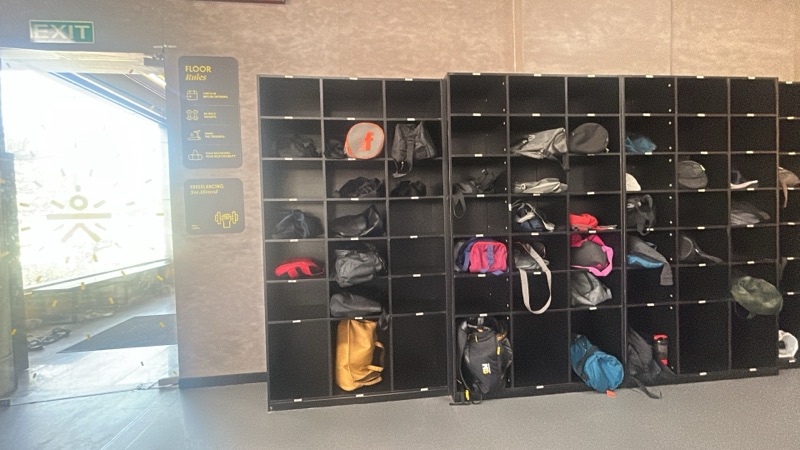
I decided not to leave immediately. Instead, I sat near the bag rack area — watching, waiting, hoping. Every time someone walked in or out, I found myself looking at their bag. Maybe someone had taken it by mistake and would return it once they realized.


Time moved slowly.


Minutes felt longer than usual when you’re waiting for something important.


I stayed there until around 10:00 AM. Finally, the front desk lady came back to me and said I could leave. She mentioned that she now had access to raise a ticket and had done so to retrieve the CCTV footage.


That should have happened earlier.


During that entire time, I found myself in an uncomfortable situation — glancing at other people’s bags, trying to match them mentally with mine. It didn’t feel right, but I didn’t have a choice. That’s what the situation had come down to.


Eventually, I left the gym.


No answers.
No clarity.
Just more waiting.


The rest of the day went on as usual, but not quite the same. Since my car keys were gone, I had to use my brother’s car to get around.


And somewhere in the back of my mind, the same thought kept repeating:


How does something like this not get immediate attention?


When a Simple Gym Visit Turns Stressful: My Experience at Cult Neo, Vidyaranyapura

A Short Stay, A Routine Plan

It was the last week of April, right in the middle of summer holidays. My two daughters—aged 13 and 9—were enjoying their break, and we had come to stay with my brother, who works at Bharat Electronics Limited in Bangalore.

Since I didn’t want to break my fitness routine, I decided to visit Cult Neo Gym Vidyaranyapura for a couple of weeks.

I went to the gym on Monday, Tuesday, and Wednesday. Everything was normal—until Wednesday.


The Missing Bag Incident

Like any regular day, I placed my gym bag in the rack and went ahead with my workout.

After finishing, I returned to the rack—and my bag was gone.

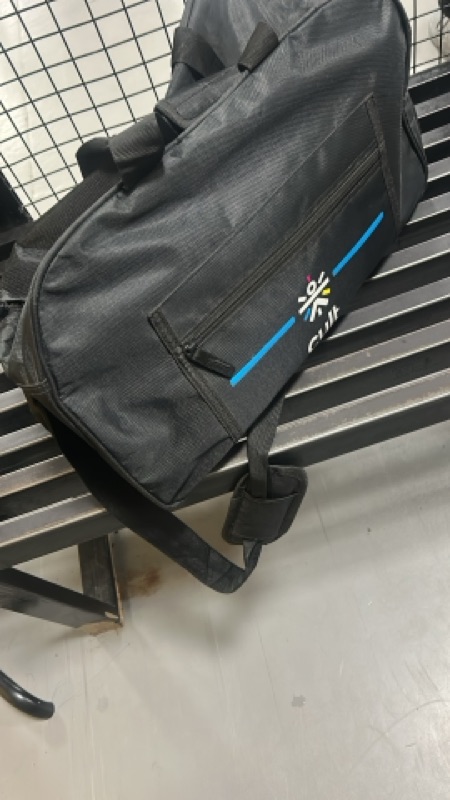
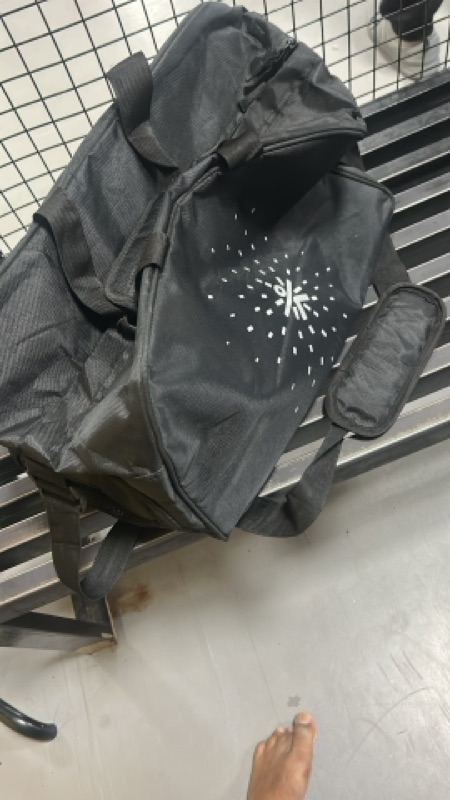
At first, I assumed I might have misplaced it. But there was another bag that looked almost identical to mine. That’s when it clicked: Cult provides similar-looking bags with their subscriptions, and it’s very likely someone took mine by mistake.

Still unsure, I picked up that similar bag and went to the parking area. That’s when things became clear:

  • My car keys were missing
  • My earbuds case wasn’t there
  • The zip didn’t have the blue-green thread I had tied for identification

That confirmed it—this wasn’t my bag.


Trying to Get Help

I immediately went back inside and placed the other bag exactly where I found it.

Then I approached the front desk.

The staff member there was polite and apologetic. She checked briefly but couldn’t locate my bag. When I requested CCTV verification, she informed me that:

  • A ticket needs to be raised to access footage
  • The senior manager would be available later in the evening

She suggested I come back and speak to him.


A Difficult Decision

At that point, I was stuck.

My car keys were inside the missing bag. I couldn’t leave.

I waited for some time, hoping the person who mistakenly took my bag would realize and return it. Thinking practically, I left:

  • My car in the parking
  • My shoes in the rack
  • The other gym bag back in place

Hoping things would resolve soon, I left the gym.

Reflections from Day 1

This incident raised a few concerns:

  • Identical gym bags create confusion
    When everyone carries the same bag, mix-ups are bound to happen.
  • Delayed access to CCTV is a problem
    In situations involving valuables like car keys, immediate action is crucial.
  • No quick escalation process
    Waiting for a manager in such cases adds unnecessary stress.
  • Security awareness needs improvement
    Members should be encouraged to double-check belongings before leaving.


Final Thoughts (Day 1)

What started as a routine workout turned into a stressful experience. While the staff was courteous, the system lacked urgency.

When personal belongings—especially something as critical as car keys—are involved, there needs to be a faster and more structured response.

This was just Day 1 of the incident. What happened next made things even more interesting.


Thursday, April 28, 2022

ITC Infotech Interview Questions

==================4/25/2022====ITC Infotech===PM======
1. what is Git Rebase & GIt Merge
2. What is Pull & Merge ? 
3. What is Port Binding In Docker ?
   Some of the members in Team want to use Docker Image . How can we use ? Ans : Port Binding 
4. Scenario : There are 2 sql servers in two different regions ? how will they communicate ?
5. You want specific consumers to access SQL DB ? How will you do it ?
6. You want to send the changes directly to Prod . How will you do ?
===========4/20/2022========ITC Infotech=======
1. You want to merge a specific commit in to parent branch, How will you do ? Ans: cherryPick
2. How do you resolve code merge
3. What is your present setup for Kubernetes ?
2 Kubernetes cluster -- 1 prod & 1 non-prod
prev org : close to 18 Kubernetes . Multiple are there in multiple subscriptions
4. If you want to run certain application on certain container how do you do it ? Ans: Node affinity
5. If you want to scale your application how do you do it in Kubernetes ?
6. How do you setup Azure Monitoring  in Kuberenetes ?
7. If you want to keep different environments and separate them in Kuberenetes . How do you do them ? Ans: Namespaces
8. What is state full and State less ?
9. what is Kubernetes RBAC ?
10.Have you worked on REST APIs 

Wipro Interview Questions

 --------wipro-----Interview----4/28/2022-----------
1. What is azure Private end Point ?
2. How do you use Azure Automation RunBooks ?
3. What are Azure managed Identity ?
4. What is Azure Application Gateway and Azure Traffic manager ?
5. What is Azure Box ?
6. what is RTO (Recovery Time Objective) and RPO (Recovery Point Objective) ?
7. What is azure sql managed instance ?
8. Have you used Azure SQL Database ?
==============4/21/2022===Wipro====
1. what is vmss? where did you use it ?
2. what is NSG ?
3. Difference between Application Gateway and Load Balancer ?
4. How does the request flow inside kuberenetes ?

Wednesday, April 20, 2022

CSE - MS Answers


1 what are functions in ARM templates ?

Below is ARM Template Format
{
  "$schema": "https://schema.management.azure.com/schemas/2019-04-01/deploymentTemplate.json#",
  "contentVersion": "",
  "apiProfile": "",
  "parameters": {  },
  "variables": {  },
  "functions": [  ],
  "resources": [  ],
  "outputs": {  }
}
https://docs.microsoft.com/en-us/azure/azure-resource-manager/templates/syntax

Functions
Within your template, you can create your own functions. These functions are available for use in your template. Typically, you define complicated expressions that you don't want to repeat throughout your template. You create the user-defined functions from expressions and functions that are supported in templates.

When defining a user function, there are some restrictions:

The function can't access variables.
The function can only use parameters that are defined in the function. When you use the parameters function within a user-defined function, you're restricted to the parameters for that function.
The function can't call other user-defined functions.
The function can't use the reference function.
Parameters for the function can't have default values.
JSON


"functions": [
  {
"namespace": "<namespace-for-functions>",
"members": {
  "<function-name>": {
"parameters": [
  {
"name": "<parameter-name>",
"type": "<type-of-parameter-value>"
  }
],
"output": {
  "type": "<type-of-output-value>",
  "value": "<function-return-value>"
}
  }
}
  }
],


2 what are types of ARM Template Deployments ?

https://docs.microsoft.com/en-us/azure/azure-resource-manager/templates/deployment-modes

When deploying your resources, you specify that the deployment is either an incremental update or a complete update. The difference between these two modes is how Resource Manager handles existing resources in the resource group that aren't in the template.
For both modes, Resource Manager tries to create all resources specified in the template. If the resource already exists in the resource group and its settings are unchanged, no operation is taken for that resource. If you change the property values for a resource, the resource is updated with those new values. If you try to update the location or type of an existing resource, the deployment fails with an error. Instead, deploy a new resource with the location or type that you need.

The default mode is incremental.

Example result
To illustrate the difference between incremental and complete modes, consider the following scenario.

Resource Group contains:

Resource A
Resource B
Resource C
Template contains:

Resource A
Resource B
Resource D
When deployed in incremental mode, the resource group has:

Resource A
Resource B
Resource C
Resource D
When deployed in complete mode, Resource C is deleted. The resource group has:

Resource A
Resource B
Resource D


3 when a variable is declared in ARM template Functions that is giving null in other parts of ARM ? what could be the reason

https://docs.microsoft.com/en-us/azure/azure-resource-manager/templates/syntax

When defining a user function, there are some restrictions:

The function can't access variables.
The function can only use parameters that are defined in the function. When you use the parameters function within a user-defined function, you're restricted to the parameters for that function.
The function can't call other user-defined functions.
The function can't use the reference function.
Parameters for the function can't have default values.

4 what is application front Door
https://docs.microsoft.com/en-us/azure/frontdoor/front-door-overview
Azure Front Door is Microsoft’s modern cloud Content Delivery Network (CDN) that provides fast, reliable, and secure access between your users and your applications’ static and dynamic web content across the globe. Azure Front Door delivers your content using the Microsoft’s global edge network with hundreds of global and local POPs distributed around the world close to both your enterprise and consumer end users.

5 what is difference between Application Security Group and Network Security Group

ASG : https://azure.microsoft.com/en-in/blog/applicationsecuritygroups/
https://docs.microsoft.com/en-us/azure/virtual-network/application-security-groups
ASGs enable you to define fine-grained network security policies based on workloads, centralized on applications, instead of explicit IP addresses. Provides the capability to group VMs with monikers and secure applications by filtering traffic from trusted segments of your network.

NSG: https://docs.microsoft.com/en-us/azure/virtual-network/network-security-groups-overview
You can use an Azure network security group to filter network traffic to and from Azure resources in an Azure virtual network. A network security group contains security rules that allow or deny inbound network traffic to, or outbound network traffic from, several types of Azure resources. For each rule, you can specify source and destination, port, and protocol.

6 scenario : sys32 files got deleted and system is not rebooting. Backup or restore not available. How will you do ? Ans : Snapshots
7   Explain Traffic Manger routing methods
    https://docs.microsoft.com/en-us/azure/traffic-manager/traffic-manager-routing-methods
Priority: Select Priority routing when you want to have a primary service endpoint for all traffic. You can provide multiple backup endpoints in case the primary or one of the backup endpoints is unavailable.
Weighted: Select Weighted routing when you want to distribute traffic across a set of endpoints based on their weight. Set the weight the same to distribute evenly across all endpoints.
Performance: Select Performance routing when you have endpoints in different geographic locations and you want end users to use the "closest" endpoint for the lowest network latency.
Geographic: Select Geographic routing to direct users to specific endpoints (Azure, External, or Nested) based on where their DNS queries originate from geographically. With this routing method, it enables you to be in compliance with scenarios such as data sovereignty mandates, localization of content & user experience and measuring traffic from different regions.
Multivalue: Select MultiValue for Traffic Manager profiles that can only have IPv4/IPv6 addresses as endpoints. When a query is received for this profile, all healthy endpoints are returned.
Subnet: Select Subnet traffic-routing method to map sets of end-user IP address ranges to a specific endpoint. When a request is received, the endpoint returned will be the one mapped for that request’s source IP address. 

8 what is Azure File Sync
9 Difference between Traffic Manager and Load Balancer
10 How does Traffic flow from Traffic Manager to Application end point
11 what is difference between service end Points and Private end Points -- Vnets
12 what are different things involved when using Application Gateways
13 What is Lifecyscle... in Azure Storage ?
14 Scenario : One Vnet in EastUS and Other Vnet in WestUS ? How will you establish communication ?
15 Scenario: customer is using B2 VM he want to optimize its cost ? what will you suggest customer ?
16 Scenario : what are benefits of using Bastion compared to using Jump server ?why customer has to pay and use Bastion ? what do you suggest ?
17 what are different type of subscriptions ?
18 what are Access policies in KeyVault ?
19 What is Azure Advisory ?
Customer Support Engineer - Microsoft Interview Questions

 Below are some of the interview questions which i have come across while attending Customer support Engineer Interview in Microsoft


1 what are functions in ARM templates ?
2 what are types of ARM Template Deployments ?
3 when a variable is declared in ARM template Functions that is giving null in other parts of ARM ? what could be the reason
4 what is application front Door
5 what is difference between Application Security Group and Network Security Group
6 scenario : sys32 files got deleted and system is not rebooting. Backup or restore not available. How will you do ? Ans : Snapshots
8 what is Azure File Sync
9 Difference between Traffic Manager and Load Balancer
10 How does Traffic flow from Traffic Manager to Application end point
11 what is difference between service end Points and Private end Points -- Vnets
12 what are different things involved when using Application Gateways
13 What is Lifecyscle... in Azure Storage ?
14 Scenario : One Vnet in EastUS and Other Vnet in WestUS ? How will you establish communication ?
15 Scenario: customer is using B2 VM he want to optimize its cost ? what will you suggest customer ?
16 Scenario : what are benefits of using Bastion compared to using Jump server ?why customer has to pay and use Bastion ? what do you suggest ?
17 what are different type of subscriptions ?
18 what are Access policies in KeyVault ?
19 What is Azure Advisory ?

Thursday, July 8, 2021

ARM Templates Interview Questions 2021

1. What is the purpose of ARM Templates
2. What are the sections we have in ARM Template
3. What is the need of Parameters and Variables in ARM Template
4. What the Deployment options you have in deployment of ARM Template
5. Incremental vs Complete vs Validation
6. How do you define dependency in ARM Template
7. I have a VNET created in Azure and I need to link that VNET for Virtual Machine resourve in ARM template, how do you do
8. Copy function 
9. Parameters vs Variables in ARM Template
10. What is the Task you use to deploy ARM Template in CD pipeline
11. What is the Powershell cmdlet we use to deploy ARM Template 
12. I have some resources created in azure from ARM template, later on I have added a new resource in ARM Template and deployed. What will happen
13. Suppose I have a VM created in Azure from ARM Template, later on you have just changed the VM Name in ARM Template, What will happen

Featured Posts

Day 2: Waiting, Hoping… and Getting Frustrated

​ Thursday morning, the last week of April 2026. I walked back into the gym at exactly the same time — 9:00 AM. There’s something about ro...